Services
Construction Project Planning
What Is Construction Project Planning and Why Does It Matter?
Construction project planning is a systematic approach to decide what you are going to build, how you are going to build it, how much it will cost and how long it will take before you begin construction. This is the stage when it is easy to change, and cheap to decide. Once you pour the concrete and build the walls, any change is costly.
In fact, one of the most common reasons for project failure in Los Angeles, in particular, is the failure to plan construction projects properly, or to do it in a rush. A developer was about to purchase a property with undisclosed environmental problems. The problem was identified pre-purchase by a comprehensive pre-purchase feasibility study so the renegotiation was possible.” Only good planning gives this sort of early intelligence.
Here’s what good construction project planning prevents:
- Three rounds of corrections on permit applications because the plans were Here’s what good construction project planning avoids:
- Project budgets that go over the original amount due to the scope being poorly defined
- Construction delays due to subcontractors arriving before prior work is ready
- Change orders that multiply because the design team and the construction team weren’t aligned before work started
- 3 rounds of correction on permit applications due to non-compliant plans with code in the first placee inspection process not being part of the project schedule
Project management in building construction is not a luxury for large commercial projects. It’s a real-world discipline that saves real money on residential, commercial and multi-family projects big and small.
Why Los Angeles Property Owners and Developers Choose JSN Construction
When Los Angeles property owners, investors and developers need construction project planning they can depend on, they come to JSN Construction for a couple of key reasons.
We do plan before we build. For every JSN Construction project, the process begins with a written pre-construction planning process that addresses feasibility, scope, budget, schedule, permitting strategy and risk identification. We don’t begin construction until the plan is final.
We know LADBS. The Los Angeles Department of Building and Safety processes permits through a system that rewards complete, well-prepared submissions and penalizes incomplete ones with weeks of delay. We prepare complete packages the first time.
We handle the entire timeline. We track every milestone, manage every schedule risk and keep every stakeholder informed from CEQA analysis to the certificate of occupancy. Your project always knows where it stands.
We are a licensed general contractor, Class B. Our CSLB License is active and can be verified at cslb.ca.gov. All our subcontractors are licensed and insured.
We’ve done projects all over L.A. Residential new construction in Studio City, commercial build-outs in West Hollywood, multi-family renovation in Burbank, ground-up commercial in Culver City – we have direct experience with the different code requirements, inspection sequences and planning challenges each property type presents in Los Angeles.
We are plain-spoken. We talk in a way that property owners and investors can really understand when it comes to timelines, budgets and planning requirements, not in construction speak that clouds what’s really happening.
How to Plan a Construction Project in Los Angeles: Phase by Phase
Planning a construction project in Los Angeles is a simple process. These are the phases JSN Construction takes every project we manage through.
Phase 1: Site Evaluation and Feasibility Study
Before you can begin any design work, you need to understand what your site actually permits. In Los Angeles, this means:
Zoning analysis: What is your lot’s zoning classification, and what does it allow? What are the setbacks, floor area ratio, and maximum height limits? Does the project require a conditional use permit or other entitlements beyond an ordinary building permit?
CEQA assessment: California’s Environmental Quality Act requires environmental review for many construction projects. Projects that qualify for a CEQA exemption often infill development, housing affordability projects, or transit-adjacent projects can save 6 to 18 months versus projects that require a full environmental review . We identify CEQA status early so the project isn’t caught off guard.
Soils and geotechnical review are particularly important for hillside properties in neighborhoods like Silver Lake, Eagle Rock, and Studio City, and communities near the Santa Monica Mountains. Soil conditions directly affect foundation design and cost.
Utility assessment: Is the site provided with adequate water, sewer and electrical infrastructure? What are the connection costs and upgrades needed?
Preliminary cost check: Is the project financially feasible given the land cost, anticipated construction cost, and target outcome? This isn’t a full estimate it’s a rough check that tells you whether the project makes sense before you invest in full design.
Feasibility studies in Los Angeles will generally run from $2,000 to $10,000 depending on scope. It always pays for itself many times over by saving investment in projects that are unbuildable or financially unviable.
Phase 2 – Project Scope Definition
Do the cost of the land, expected cost of construction, and expected outcome make it financially feasible to do this project?
This is not a full estimate it is a rough check to know if the project makes The project scope is the detailed description of what will be constructed. It stipulates the size, program (what rooms and functions are included), quality level, materials, and performance standards the project must satisfy. ns are included), quality level, materials, and performance standards the project must meet.
Scope definition sounds simple. In practice, it’s one of the most commonly skipped steps and the source of most change orders once construction begins.
A well-defined scope provides the following: In practice, it’s one of the most common steps to skip and the source of most change orders once construction gets underway.
- What kind of space? How many square feet?
- How nicely is it finished? Is it basic, mid-range, or high-end?
- Which systems are we talking about: HVAC type, electrical service size, or plumbing fixture count?
- What is the extent of site work: grading, paving, landscaping, and utilities?
- What are the phasing requirements if the project is being developed in phases?
We write a scope document at JSN Construction that becomes the basis for the design, the permit application, the subcontractor bids, and the construction contract. After this point, changes to scope are controlled through a formal change order process not found as surprises mid-project.
Phase 3 — Design and Constructability Review
During the design phase, your architect prepares the drawings that will go to LADBS for review and permit. In building construction at this stage, project management means the construction team is involved before the drawings are finalized, not after.
What’s the big deal? A design can be gorgeous, but financially unrealistic. During the constructability review the builder will look over the drawings and point out anything that is hard to build, detailed incorrectly or will cause field problems. Sequence makes sense. Construction goes smoother. This is where many projects fall down materials are not chosen early enough, lead times are not factored in, and trades are scheduled out of sequence.
JSN Construction conducts constructability reviews as a component of our pre-construction planning service. And we see:
- Architectural details that could contradict architectural drawings
- Mechanical, electrical and plumbing routing not coordinated
- Full specifications not aligned with the approved budget
- Information that will be hard or impossible to review as required by LADBS
This saves weeks of plan check corrections by catching these issues before you submit the permit. Finding them after permit approval means more delays, revisions, and resubmittals.
Phase 4 — Project Budget Development
The project budget is not an estimate. A real project budget is a complete financial plan for the project that covers every cost not just construction materials and labor.
A full construction project budget for a Los Angeles construction project includes the following:
Hard costs:
- Site work: grading, utilities, demolition
- Foundation
- Structural framing –
- Exterior envelope: roof, siding, windows, doors
- Mechanical, electrical and plumbing systems
- Interior finishes
- Hardscape, Landscaping
Soft costs (usually 20-35 percent over hard costs):
- Engineering and architecture fees
- LADBS permit and plan check charges
- Geotechnical & Soil Reports
- Environmental review fees (CEQA)
- Special inspection charges
- Interest on construction loan
- Builder’s risk insurance
- Furniture, fixtures, and equipment (FF&E)
Contingency reserve: A contingency reserve of 10 to 15 percent of total hard costs should CEQA (Environmental review fees)nLos Angeles, where older homes often reveal unforeseen conditions during wall openings, and where permit revisions may increase scope, contingency is not optional it’s essential.
Value engineering during the budget phase, reviewing the design for opportunities to reduce cost without reducing quality, typically finds 5 to 15 percent in savings prior to construction. “Now is when you want to make those adjustments.” Changes are costlier in construction.
Construction Project Timeline: Building a Realistic Schedule for LA
The construction project timeline is where most projects in Los Angeles get into trouble not because of construction itself, but because of the time that happens before construction starts.
Here’s a realistic construction project timeline for a typical permitted project in Los Angeles:
Residential new construction or significant renovation:
- Feasibility and site analysis: 2 to 4 weeks
- Design development: 6 to 16 weeks
- Structural and MEP engineering: 4 to 8 weeks
- LADBS plan check and permit: 3 to 6 months (sometimes longer for complex or fire-zone projects)
- Site preparation and foundation: 4 to 8 weeks
- Framing and rough construction: 8 to 16 weeks
- Mechanical, electrical, and plumbing rough-in: 4 to 8 weeks
- Inspections, insulation, drywall: 4 to 6 weeks
- Interior finishes, cabinetry, flooring: 6 to 10 weeks
- Final inspections and certificate of occupancy: 2 to 4 weeks
Total realistic timeline from design start to move-in: 12 to 18 months for most new construction projects in Los Angeles.
Commercial tenant improvement:
- Design and engineering: 4 to 8 weeks
- LADBS permitting: 3 to 6 months
- Construction: 6 to 16 weeks
- Total: 6 to 12 months from design start to occupancy
The LADBS permitting phase consistently surprises property owners and investors who haven’t built in LA before. Inspector schedules vary in Los Angeles, and some phases cannot continue until an inspection is approved. Follow-up inspections can also add time. Building this reality into the construction project timeline from day one rather than hoping for a fast approval is what separates realistic schedules from ones that slip.
Critical Path Method (CPM) for Construction Scheduling
In construction, the critical path method (CPM) is widely used in project management for construction and project schedule management. The critical path is the longest sequence of tasks that must be finished for the project to be completed as early as possible. Any delay in a critical path activity will directly delay the completion date.
Noncritical tasks have float, which is a time buffer that allows them to slip without impacting the end date. Having an understanding of which tasks are on the critical path helps the project manager determine where to direct attention and resources.
For most LA construction projects the critical path runs through the following:
- LADBS permit approval (single longest wait time)
- Examination of base
- Frame Inspection
- Inspection of mechanical rough-in
- Drywall installation (cannot begin until inspections are passed)
- Final inspections & Certificate of Occupancy
Procurement Planning and Long-Lead Materials
One of the most common causes of avoidable delays in Los Angeles construction is the late procurement of long-lead materials. Some things, like custom windows, specialty HVAC gear, kitchen appliances, structural steel, custom cabinetry, and some tile products, take 8 to 20 weeks or more to get here.
The procurement plan identifies all long-lead items at the beginning of the project and establishes order dates in line with the construction schedule. If a custom window system takes 14 weeks to deliver, and window installation occurs in week 22 of construction, then the order needs to go out in week 8. This is the stuff that a project manager tracks systematically and avoids the all too common experience of a building that’s framed, inspected, and waiting for a window order that never came in time.
Our Blog Posts
New Construction Homes in Los Angeles: Build the Home You Actually Want
April 29, 2026
No Comments
Read More »
Pre-Construction Planning in Los Angeles: What Is It?
Pre-construction planning is all the work that occurs from the time a project is conceived until physical construction begins. It’s where most of the thinking, problem solving and coordination takes place so the construction phase can move forward without constant interruption.
Pre-construction planning in Los Angeles consists of:
Permit Strategy and Application Preparation
Obtaining construction permits early can make or break your project timeline. Permitting delays are common in Los Angeles so it is important to start early in the pre-construction phase. If you don’t get the permits in time, it can delay construction and throw the whole construction schedule out of whack.
JSN Construction will prepare full, documented permit packages for LADBS submittal. We know what plan check examiners want and how to prepare submissions that are low correction rounds. We also follow up on every correction comment and answer quickly, as unanswered corrections for weeks add months to the permit timeline.
Subcontractor Prequalification and Bidding
We pre-qualify subcontractors, solicit competitive bids, and select the team during pre-construction planning before the project begins. This means every trade has a contract, a confirmed scope, and a slot in the project schedule prior to mobilization.
Contractors who skip this step often spend the first few weeks of construction calling subcontractors, soliciting bids, negotiating prices, and trying to fit them into an already started schedule. That work is not the right thing to do at this time.
Risk Identification and Mitigation
One of the most useful results of pre-construction planning is a risk register, a systematic listing of possible project risks, their likelihood, their potential impact, and the mitigation strategy for each. Los Angeles construction projects have common risk items, including:
- Delays in LADBS Permits (Especially for Fire-Zone or Hillside Properties)
- Hidden site conditions (buried utilities, contaminated soil, abandoned foundations, etc.)
- Material price escalation (LA construction costs up 44 percent in five years)
- Subcontractor availability gaps (15 percent skilled trades vacancy rate in L.A. County)
- Weather events: atmospheric river rain events during the rainy season can put a halt to the exterior work for weeks
- Seismic events requiring inspection of completed work
When you identify these risks before construction starts, you have a plan for when they do occur not improvising under pressure with the job clock ticking.
Safety Plan Development
Cal/OSHA requires a site-specific safety plan for every construction project in California. Pre-construction planning includes developing this plan before workers arrive on-site. The safety plan covers fall protection, excavation safety, material handling, electrical safety, and site access protocols.
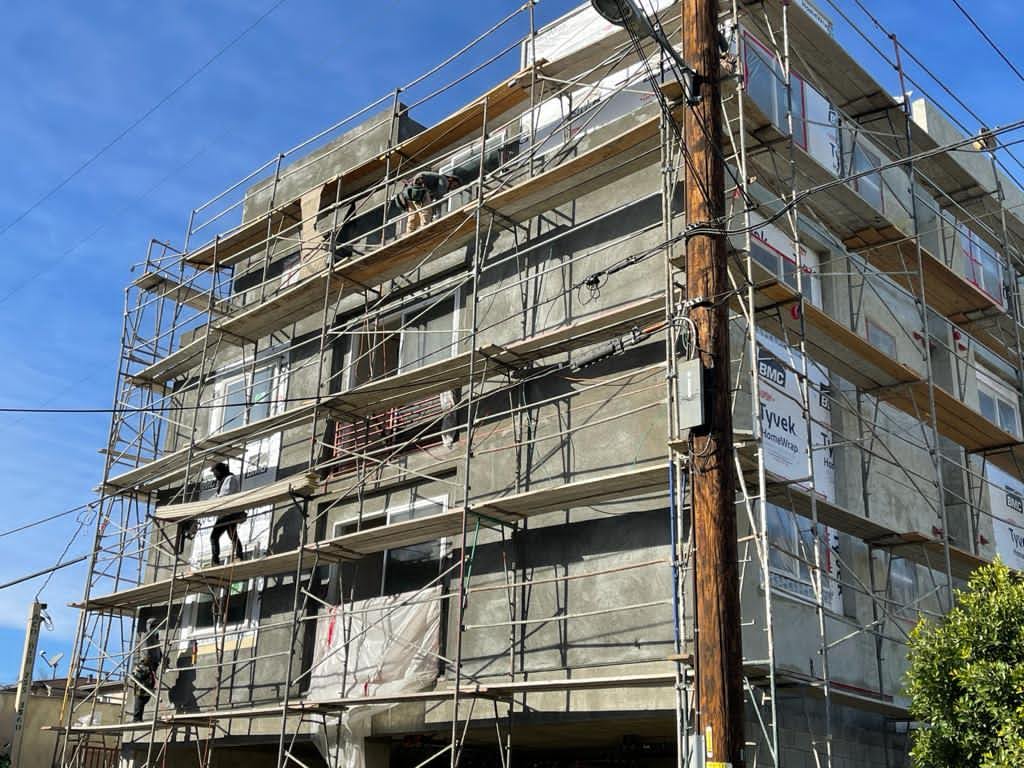
Infrastructure Project Management: Planning at Scale in Los Angeles
Infrastructure project management expands the planning discipline of building construction to larger scale projects such as roadways, utilities, public facilities, transportation infrastructure and large commercial or institutional developments.
There is a lot of active infrastructure development in Los Angeles: Metro system expansion, public housing development, educational facilities, healthcare campuses, and utility infrastructure upgrades. Infrastructure Project Management In case of these projects there are more layers of complexity.
- Coordination and approvals of various public agencies
- Compliance with Certified Payroll and Prevailing Wage Requirements
- Community impact management and public engagement
- Environmental compliance and CEQA documentation
- multi-year phased delivery schedules, long-term
- Client Services for Public Agencies: Owner Representation
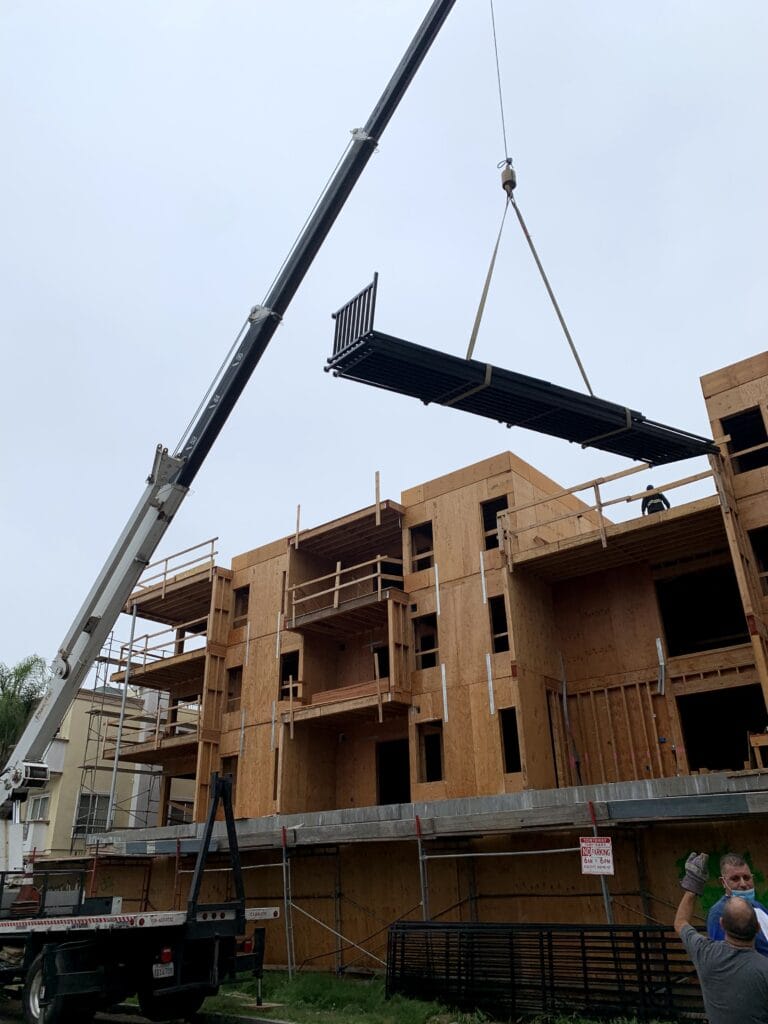
JSN Construction’s infrastructure project management experience includes large scale commercial ground-up development and phased multi-building campus projects throughout Los Angeles County. We have multiple project managers, multiple design teams and multiple construction contractors all working under one master project plan.
Common Construction Project Planning Mistakes in Los Angeles
We’ve worked across this city long enough to see the same planning mistakes repeat themselves. Here’s what to avoid.
Design before zoning confirmation. The most expensive design work is design for a project that can’t be built. Before ordering architectural drawings, check zoning, entitlements needed, and any overlay restrictions.
Budgeting the hard costs only. Soft costs in LA architecture, engineering, permits, entitlements and loan interest add 20 to 35 percent to hard construction costs. A developer that may have a $1 million budget for construction but forgot to factor in $200,000 to $350,000 in soft costs is going to run out of money.
Treating the permit timeline like a sprint. LABDS takes time. A project that takes 90 days of actual construction but 5 months of permitting needs a total timeline of 7 months, not 3 months. Incorporating the real permit timeline into the schedule from day one avoids the cascading conflicts that happen when construction gets underway before permitting is done.
Ordered materials too late. Materials with long lead times need to be ordered at design time, not at time of need. If a project manager includes procurement in the schedule, material delays are not involved. No review of constructability. A beautiful drawing that can’t be built as drawn will lead to field problems, change orders, and quality issues. Read it before they let it in.
Skipping the constructability review. A beautiful drawing that can’t be built as drawn will create field problems, change orders, and quality issues. Review it before it’s permitted.
Underestimating contingency. LA’s older housing stock surprises contractors regularly when walls open. Soil conditions on hillside lots surprise even experienced engineers. Budget a real contingency 10 to 15 percent of hard costs and expect to use some of it.
Ready to Plan Your Project Properly? We can start before you break ground.
Good construction project planning saves multiple days during construction and a project spends every day in it. Every dollar spent on pre-construction planning saves many dollars in change order, rework, and delay costs.
Construction Project Planning Services in Los Angeles: JSN Construction provides comprehensive construction project planning services in Los Angeles, from initial feasibility to permit strategy to detailed project budget development to creation of a construction project timeline to full project management in building construction through to the certificate of occupancy.
If you’re building a custom home in Pasadena, a commercial build-out in West Hollywood, a multi-family development in Burbank, or a large-scale infrastructure project anywhere in LA County JSN Construction has the planning discipline and local experience to get it right from day one.
Call JSN Construction today for your free consultation in project planning. Tell us what you’re building, where it is and what your timeline looks like and we’ll show you what proper planning can do.
📞 818-925-0053 🌐 JSN Construction 📍 Los Angeles, CA, and Surrounding Areas: Residential, Commercial, Multi-Family, Infrastructure